
Connecting and Bridging Gaps: Building Equity Through Structured Cognitive Behavioral Training
Tribalism isn’t just a matter of overt prejudice or visible conflict. Its real power lies in how it quietly shapes cultures, communities, and institutions worldwide. The “us versus them” dynamic is not unique to any one country or region; it’s a deeply rooted phenomenon that weaves itself into social structures, influencing everything from how people relate to one another to how decisions are made at the highest levels. Addressing tribalism calls for a nuanced approach, one that recognizes its historical roots, its many shapes, and the profound impact it has on societies everywhere.
At ATBI, we use an interdisciplinary strategy, drawing on education, neuroscience, psychology, social work, and sociology – not just to understand tribalism, but to actively counter its influence. This work demands ongoing commitment, both personal and collective. Real transformation doesn’t happen overnight; it requires individuals and communities to engage in honest learning, self-reflection, and continuous growth.
The journey toward true equity is a long-term process built on patience, perseverance, and trust. Change begins by raising awareness and nurturing open dialogue, then deepens through structured educational interventions that gradually shift collective consciousness. While the results may not be immediate, this effort is critical for building more resilient, unified, and prosperous societies.
Despite being widely recognized as a social and political challenge that undermines democracy and stability, tribalism is rarely addressed with the urgency of a public health crisis. Even when its effects are visible, such as in episodes of violence, exclusion, or unrest, it remains a problem that is too often minimized or misunderstood.
It’s also important to clarify a common confusion: ethnicity and tribalism are not the same. Ethnicity refers to shared cultural, ancestral, or linguistic bonds, a source of identity and community, like the Akan or Ewe groups in Ghana. Tribalism, on the other hand, goes a step further: it’s about prioritizing the interests of one’s own group, sometimes at the expense of others. This can lead to favoritism, bias, and conflict, especially when group loyalty overrides a sense of broader common good.
In short, ethnicity is about shared heritage; tribalism is about exclusive allegiance. The challenge we face, and the issue we aim to address, is tribalism: that tendency to draw lines, build walls, and foster division, often unconsciously.
Our mission is to help individuals and communities recognize these patterns and replace them with a new story, one rooted in awareness, equity, and genuine connection. History reminds us that diverse societies can coexist harmoniously. At ATBI, we believe that with the right tools and commitment, we can reclaim that vision and build bridges where there were once barriers.
Systemic Problems Require Systemic Solutions
“There must exist a paradigm, a practical model for social change that includes an understanding of ways to transform consciousness that are linked to efforts to transform structures.”
— Bell Hooks —
“If you want to go fast, go alone. If you want to go far, go together.”
— African Proverb —
Tribalism is rarely recognized as a public health crisis by policymakers or institutions, yet its effects ripple through every layer of society. Simply acknowledging tribalism isn’t enough. Real change requires more than fleeting awareness; it demands deep understanding and sustained, systemic action.
To truly dismantle systemic tribalism, individuals and communities must expand their awareness of how these patterns operate, historically, socially, and structurally. Only with this understanding can we craft effective, systemic strategies that foster genuine tribal equity.
Tribal equity is about much more than a “level playing field.” It means recognizing that historic and ongoing wrongs don’t vanish on their own; they require intentional, ongoing attention and support, especially for those most harmed. Uprooting tribalism calls for more than isolated or passive responses. Instead, it requires the strategic, collective work of embedding antitribalism into our institutions, our conversations, and our daily lives.
What is Antitribalism?
Antitribalism is the conscious practice of opposing and dismantling tribalism. It’s an ideology and a set of actions that push back against the divisions, biases, and discrimination that group loyalties can create. In practice, antitribalism means:
- Challenging and transforming systems and institutions that perpetuate favoritism or division
- Celebrating individual and cultural differences while upholding equal rights and opportunities for all
- Fostering a collective identity that transcends tribal lines and nurtures unity, locally and globally
- Educating to raise awareness of tribalism’s harm to social cohesion and development
- Advocating for policies and dialogue that guarantee equitable treatment and promote collaboration across group boundaries
Antitribalism isn’t just the absence of division. It’s an active, ongoing stance, one that champions inclusivity, understanding, and harmony among all identities.
To be antitribal is to examine and challenge our own assumptions and behaviors. It’s an invitation to move beyond inherited patterns and to take up the ongoing, collective work of making fairness and justice real for communities long impacted by structural inequality. It’s about building and embodying shared visions and commitments to tribal justice and equity.
This kind of transformation starts within, by developing our own awareness, knowledge, and skills, and then radiates outward, shaping a broader collective consciousness. As with all meaningful social change, the journey begins with the individual, but it must never end there.
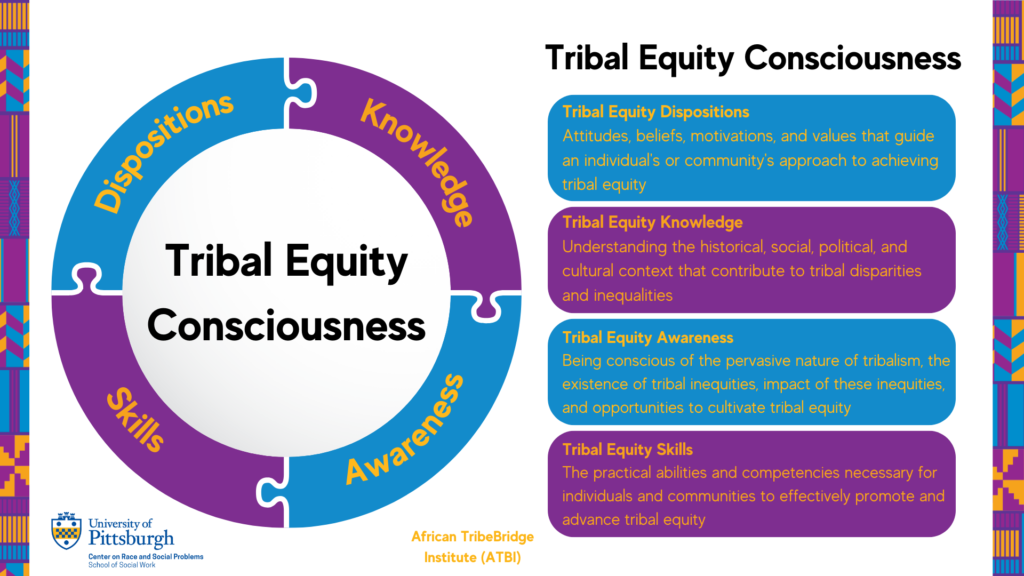
Figure 1. Tribal equity consciousness consists of four interrelated components: racial equity dispositions, racial equity knowledge, racial equity awareness, and racial equity skills.
Consciously cultivating tribal equity
“Our goal is to create a beloved community, and this will require a qualitative change in our souls as well as a quantitative change in our lives.”
— Rev. Dr. Martin Luther King, Jr. —
“A single bracelet does not jingle.”
— African Proverb —
In every society, each group or community weaves its own unique thread into the larger human story. When tribalism takes hold, it can fray these threads, creating divisions that may take generations to repair. But if we choose understanding and celebration over suspicion and rivalry, we can reinforce the collective fabric, ensuring it remains strong for those who come after us.
The task of uprooting tribalism is daunting, but it’s also an unparalleled opportunity for healing and transformation. As we respond to the call for deeper consciousness and equity, each of us must ask how we can help build a society that welcomes everyone and gives everyone a chance to belong.
Structured Cognitive Behavioral Training (SCBT) is a powerful, evidence-based tool designed to address the unconscious biases and behaviors that keep tribalism alive. The SCBT framework for tribal equity consciousness development gives people practical exercises and resources to shift from automatic, divisive reactions toward intentional, inclusive actions, both in our thinking and in our daily lives. In this way, SCBT empowers individuals and communities to reflect on, and actively cultivate, genuine tribal equity.
Crucially, the SCBT approach doesn’t just focus on individuals. It also looks at the bigger picture: the policies, institutional practices, and social habits that reinforce inequity. By applying systems thinking, SCBT helps us see not just isolated instances of tribalism, but the web of relationships and structures that sustain it, and gives us strategies for transforming those systems, too.
True change starts with recognizing the problem and making a personal commitment to justice. This means confronting our own assumptions, embracing continuous learning, and committing to growth and collective action.
The SCBT framework is organized around six interconnected spheres, each representing a core area of learning, reflection, and action. By moving through these spheres, individuals and communities deepen their understanding, hone their skills, and continually refine the ways they put tribal equity into practice. This ongoing process acknowledges that the work of justice and unity is never finished, but always evolving, one action, one relationship, one community at a time.
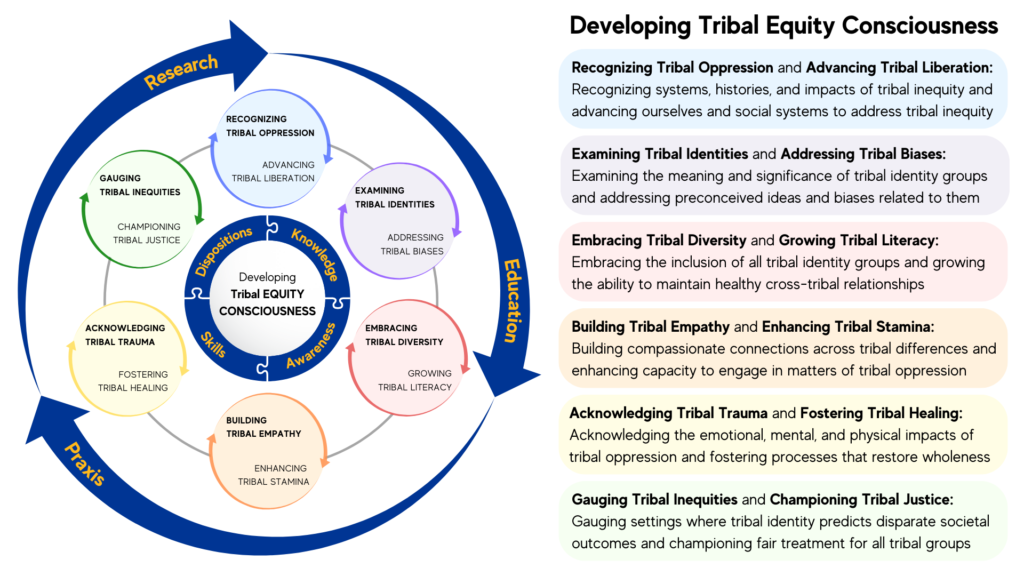
Figure 2 – Critical systems thinking mental model of the SCBT framework for tribal equity consciousness development, consisting of six interconnected, bilateral spheres of embodiment—reciprocal consciousness development behaviors stimulated through research, education, and praxis cycles.
The African Tribe Bridge Institute (ATBI) empowers both learners and educators through our Structured Cognitive Behavioral Training (SCBT) framework for developing tribal equity consciousness. Using systems thinking, we offer immersive resource modules that blend narrative guides, videos, interactive activities, articles, reflection prompts, discussion forums, and more. This rich mix of resources helps users analyze the complexity of tribalism and reflect on the personal and collective actions they can take to foster anti-tribal communities and cultures. Contributions from a diverse, engaged learning community continually enrich our platform.
Through this dynamic resource hub, users are invited to explore the core spheres of the tribal equity consciousness framework. The goal is to build the skills and motivation needed to appreciate different perspectives, to elevate cultural humility and competence, and to empower bold visions and commitments to inclusive, equitable communities. Here, learners and teachers alike can grow their confidence and develop the mindset to become innovative, action-oriented agents for transformative social change.
By learning together, consciously, consistently, and collectively, we lay the groundwork for reshaping our societies. This process helps align our deepest values with the realities we create, moving us closer to a beloved community where every individual has the chance to thrive.
Resource Modules and Learning
A Platform for Advancing Tribal Equity Consciousness
The African Tribe Bridge Institute’s resource platform offers a groundbreaking approach to understanding and addressing tribalism through Structured Cognitive Behavioral Training (SCBT). Designed as an innovative hub for learning, the platform blends academic rigor with practical tools, interactive experiences, and even elements of entertainment, making deep learning both accessible and engaging.
Core Features of the Platform
- Structured Cognitive Behavioral Training (SCBT) Modules:
At the core of the platform are SCBT modules, which provide structured, interactive learning experiences. These modules guide users through the psychological and sociocultural dynamics of tribalism using narrative guides, hands-on activities, articles, reflection prompts, discussion forums, case studies, real-world scenarios, and evidence-based strategies to confront and reduce tribal biases. - Multimedia Educational Content:
Users can access a diverse array of multimedia resources, including expert video lectures, documentary clips, podcasts, and infographics. These materials present a range of perspectives on tribalism and its real-world impact. - Interactive Learning Tools:
Engagement is deepened through interactive elements such as quizzes, simulations, and discussion prompts. These tools encourage learners to reflect critically and put new concepts into practice. - Discussion Forums and Community Engagement:
A key strength of the platform is its vibrant forums for discourse and collaboration. Learners can share insights, ask questions, and connect with peers and experts, building a dynamic, supportive learning community.
Our Approach to Implementation
- Content Development and Curation:
We collaborate closely with subject matter experts in psychology, sociology, anthropology, and cultural studies to ensure all content is high-quality, relevant, and grounded in real-world contexts. - User-Centric Design:
The platform is designed with the user in mind, prioritizing intuitive navigation, accessibility, and a welcoming, supportive learning environment. - Continuous Feedback and Adaptation:
We actively seek user feedback and regularly update content and features to ensure the platform remains relevant, effective, and responsive to the needs of our diverse community.
With these resources, the African Tribe Bridge Institute is equipping individuals and communities to explore, understand, and ultimately transform the patterns of tribalism, helping to build a more equitable, inclusive society for all.
Anticipated Outcomes
- Deeper Awareness and Understanding:
Users will develop a comprehensive grasp of the roots, manifestations, and impacts of tribalism, gaining an informed perspective on equity and inclusion in all contexts. - Positive Behavioral Change:
By engaging with SCBT techniques, learners will experience real shifts in attitudes and behaviors, cultivating more inclusive, equitable, and empathetic mindsets. - Empowerment for Action:
Equipped with practical knowledge and actionable tools, users will be prepared to serve as advocates and leaders for tribal equity within their communities and professional environments.
A Thriving Knowledge Community:
The platform will foster a vibrant, interactive network of learners, educators, and practitioners, each dedicated to understanding, addressing, and ultimately dismantling tribalism in pursuit of a more just and unified society.
Resource Modules
Resource Modules: Building Tribal Equity Consciousness
Understanding and dismantling tribalism – the fundamental “us vs. them” dynamic, requires a multi-layered approach. These modules are designed to guide any learner, regardless of background, through a stepwise journey: from grasping the history and psychology of group identities to building empathy, healing, and actionable social change. Each module draws on interdisciplinary research from social work, psychology, sociology, history, and education to deepen awareness, challenge bias, and foster real transformation (Tajfel & Turner, 1979; Dovidio et al., 2010).
Let’s Understand the History of Africa (Great Ancient Africa)
Exploring the Global Roots of Group Identity
This opening module examines the origins of group identity, using Africa’s ancient history as a lens for understanding the global story. Long before colonial borders, diverse cultures, languages, and social systems flourished, demonstrating that complex group identities and boundaries are a universal human phenomenon (Ehret, 2002). By learning about the rich tapestry of ancient societies, learners gain perspective on the enduring dynamics of “us vs. them” and how they have shaped, and continue to shape, human history.
Citations:
- Ehret, C. (2002). The Civilizations of Africa: A History to 1800.
Module #1: Tribal Equity Consciousness—An Overview
This foundational module sets the stage for developing tribal equity consciousness — a mindset and skillset for recognizing, understanding, and transforming group-based bias and inequity. Learners will:
- Explore the evolution of group identities and tribalism, and their impact on individuals and societies (Tajfel & Turner, 1979).
- Reflect on confidence, mindsets, and the motivation needed to pursue equity and justice.
- Understand the theory and practice of tribal equity consciousness.
- Engage with the Structured Cognitive Behavioral Training (SCBT) framework as a tool for personal and collective growth (Beck, 2011; Bandura, 1977).
Citations:
- Tajfel, H., & Turner, J.C. (1979). An Integrative Theory of Intergroup Conflict.
- Beck, J.S. (2011). Cognitive Behavior Therapy: Basics and Beyond.
- Bandura, A. (1977). Social Learning Theory.
Module #2: Recognizing Tribal Oppression and Advancing Tribal Liberation
This module helps learners identify and analyze the systems, histories, and impacts of group-based power, privilege, and inequality. It emphasizes:
- Investigating historical and present-day manifestations of oppression (Fredrickson, 2002).
- Examining how social, political, and economic systems perpetuate group-based disparities.
- Generating strategies for both personal and systemic transformation.
- Applying knowledge through praxis—putting theory into practice to advance liberation.
Citations:
- Fredrickson, G.M. (2002). Racism: A Short History.
Module #3: Examining Tribal Identities | Addressing Tribal Biases
This module invites deep reflection on personal and collective identities, with a focus on:
- Recognizing how identity shapes experience and perspective (Phinney, 1990).
- Identifying and challenging stereotypes and implicit biases (Greenwald & Banaji, 1995).
- Engaging in education and dialogue to understand the experiences of others.
- Practicing self-awareness to move toward greater equity.
Citations:
- Phinney, J.S. (1990). Ethnic Identity in Adolescents and Adults: Review of Research.
- Greenwald, A.G., & Banaji, M.R. (1995). Implicit Social Cognition: Attitudes, Self-Esteem, and Stereotypes.
Module #4: Embracing Tribal Diversity | Growing Tribal Literacy
This module focuses on building cultural competence and literacy, skills critical for healthy, cross-group relationships:
- Developing appreciation for diverse perspectives (Sue et al., 2009).
- Practicing empathy and active listening.
- Deepening understanding of group dynamics in various contexts.
- Learning to recognize and address oppression at both individual and systemic levels.
Citations:
- Sue, D.W., et al. (2009). Racial Microaggressions and Difficult Dialogues on Race in the Classroom.
Module #5: Building Tribal Empathy | Enhancing Tribal Stamina
Effective change requires not only knowledge but also emotional resilience and compassion. This module covers:
- Cultivating empathy for those from different backgrounds (Batson et al., 1997).
- Developing the stamina to engage in difficult conversations about bias, difference, and injustice.
- Encouraging honest dialogue and self-care practices to sustain long-term engagement.
Citations:
- Batson, C.D., et al. (1997). Empathy and Attitudes: Can Feeling for a Member of a Stigmatized Group Improve Feelings Toward the Group?
Module #6: Acknowledging Tribal Trauma | Fostering Tribal Healing
Here, learners explore the emotional, mental, and physical impacts of group-based trauma, and pathways to healing:
- Recognizing signs of trauma in oneself and others (Herman, 1992).
- Supporting individuals and communities through healing journeys.
- Engaging in restorative practices that repair harm and promote reconciliation (Zehr, 2002).
- Advocating for systemic change to prevent future harm.
Citations:
- Herman, J.L. (1992). Trauma and Recovery.
- Zehr, H. (2002). The Little Book of Restorative Justice.
Module #7: Gauging Tribal Inequities | Championing Tribal Justice
In the final module, learners assess and address systemic inequities, working to ensure fair treatment and outcomes for all groups:
- Measuring disparities in areas like education, health, justice, and employment (Williams & Mohammed, 2009).
- Identifying root causes, including systemic bias and historical injustices.
- Developing and implementing interventions to promote equity.
- Advocating for policy change, resource allocation, and community mobilization.
Citations:
- Williams, D.R., & Mohammed, S.A. (2009). Discrimination and Racial Disparities in Health: Evidence and Needed Research.
Each module is designed to build on the last, guiding you from awareness to action, and supporting your journey to becoming a champion for tribal equity, wherever you are in the world.